LASER HAIR REMOVAL
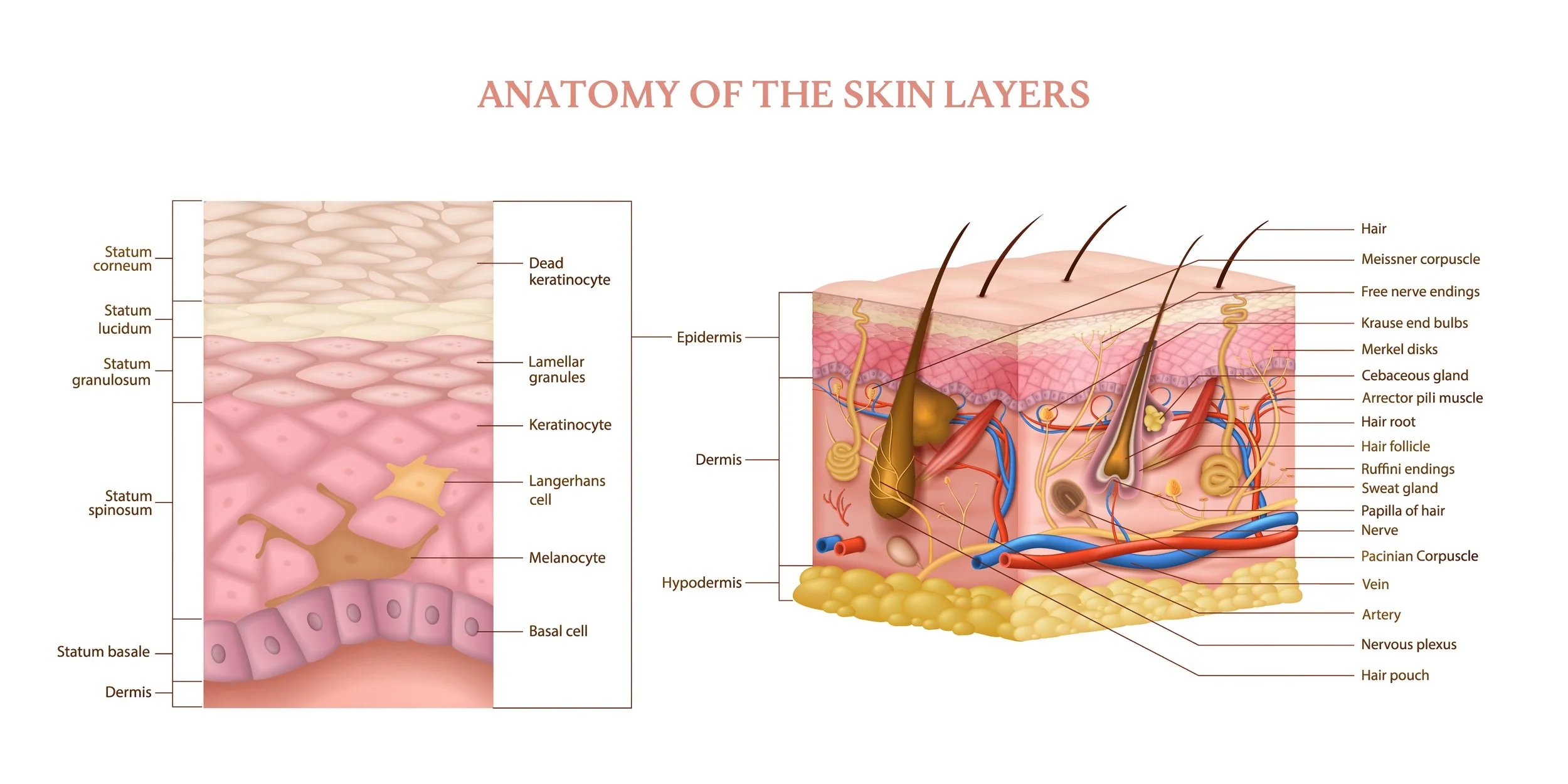
Anatomy of the Skin
The Epidermis
The epidermis is where skin cells are born and pushed through their natural cycle to where they keratinize and shed. The deepest level of the epidermis is known as the stratum basale and cells grow here because they are close to their nutrient source(in the dermis), as they are pushed up and away they begin to die(the stratum granulosum). After they die they start to fill up with Keratin.
Keratin
Keratin is a strong, protective protein found in your hair, nails and and in each superficial skin cell. Think of it as a natural building block that helps keep these parts of your body tough, smooth, and healthy. It also protects against damage from things like heat, water, and friction.
Merkel Cells
Merkel Cells have a function in sensory pain and pressure. They are special skin cells that help you feel touch. They're like tiny sensors in your skin, especially in areas like your fingertips. When something presses against your skin, Merkel cells send signals to your brain so you can feel textures, shapes, and pressure. They are found in the stratum basale, where skin cells are born.
As you grow older, the number of merkel cells decrease. This is important to take into account when working on younger kids and adults, they will likely feel the laser more.
Langerhans Cells
Langerhans cells are dendritic cells that are responsible for the immunity of your skin. They are susceptible to heat, meaning they will move away from a heat source for up to a week. This is important as its important to advise your client to continue cooling the treated area after leaving the clinic/spa to allow for a better and faster recovery.
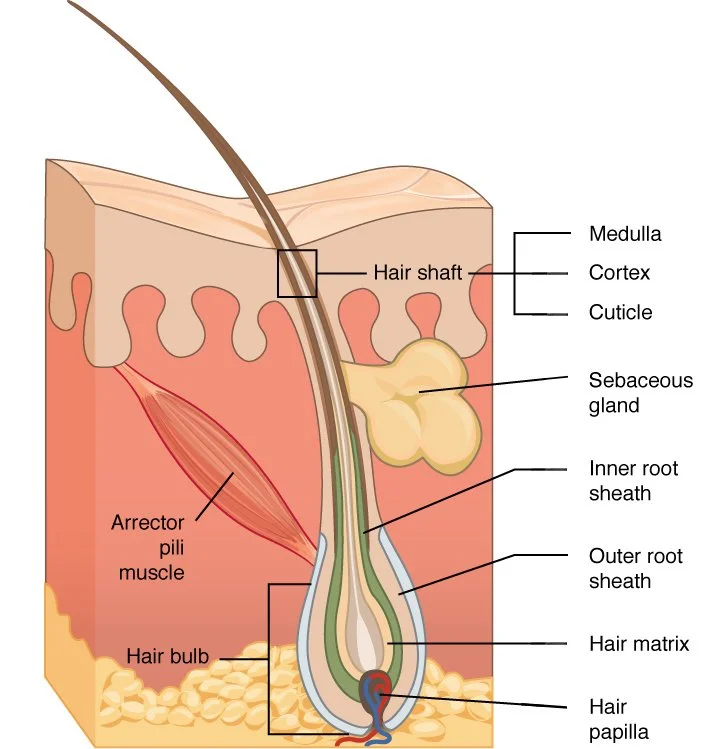
Anatomy of the Hair
Hair Bulb
The bulb is a rounded structure at the bottom section of the hair follicle. It surround the papilla and matrix and is nourished by blood vessels. It’s considered the living part of the hair because the hair visible above the surface of the skin is dead. The bulb also holds stem cells that divide every 24 to 72 hours, faster than any other cells in the body. Hormones affect the bulb and hair growth, for example during puberty, pregnancies and individuals with PCOS.
Hair Matrix
The hair matrix is the leading edge of the papillae. It’s where cells produce new hairs as older ones die and fall out. It’s made up of skin cells that are rapidly dividing. When they die they are pushed up and out by new cells, forming the hair. Hair is made up of dead skin cells. The matrix is the site of hair growth and the location of melanocytes(these determine hair colour). Grey hair has lost its melanin.
Hair Papillae
The papilla is made up of connective tissue and blood vessels that nourish growing hair. It provides blood supply, oxygen, and nutrients essential for hair growth and the maintenance of the hair cycle. It id located at the very base of the hair follicle.
Lifecycle of Hair
Anagen phase
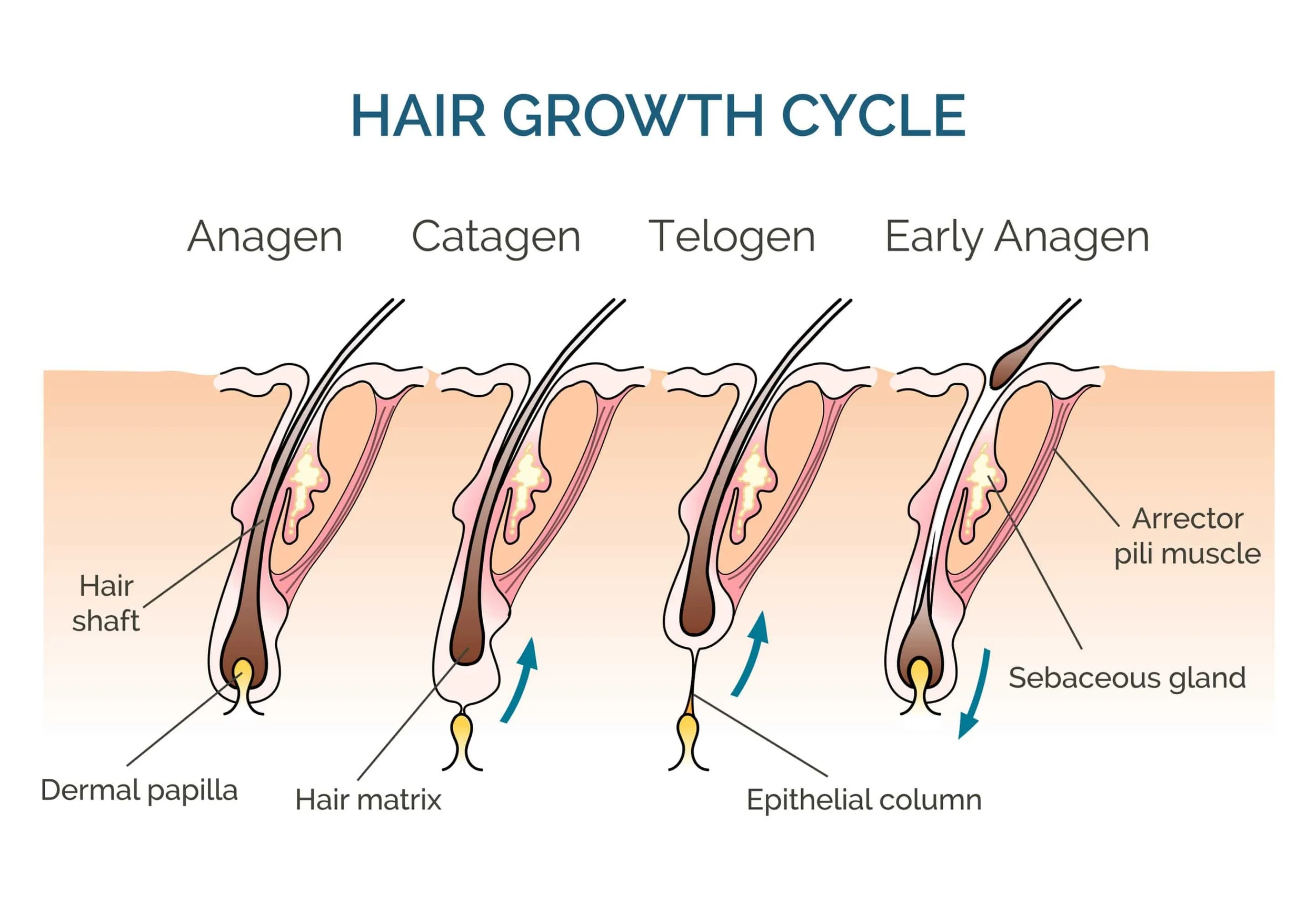
The anagen phase for hair growth is when it is actively growing. This phase lasts 4 weeks to 7 years, depending on the location of hair, genetics, age, and health.
The anagen phase is the only time the hair is actively connected to the follicle. This is important because it’s the only stage in the hair growth cycle where the hair follicle can be permanently disabled.
The life cycle of hair is divided into three phases:
Anagen phase(actively growing)
Catagen phase(transitional)
Telogen phase(resting)
Body Area
Scalp
Face
Underarms
Arms and Legs
Bikini
Back and Chest
Anagen Phase Length
~2 to 7 years
~2 to 4 months
~4 to 6 weeks
~4 to 6 weeks
~3 to 4 weeks
~4 to 6 weeks
Catagen phase
The catagen phase is a short transitional phase of hair at the end of the anagen phase. In this phase the hair stops growing. In this phase the lower part of the hair follicle regresses and shrinks, and the hair detaches from its blood supply and nutrient source. This phase lasts anywhere from 2 days to 3 weeks depending on the location of the hair. Laser hair removal is ineffective when the hair is in this phase.
Telogan phase
The telogan phase is the resting phase of hair, which occurs after the catagen phase. In this phase the hair is separated from the epithelial column. At this point the root of the hair(bulb) has shrunk and is no longer active, making any hairs in this phase untreatable in a laser hair removal treatment. This phase lasts around 2 to 4 months on most body hair.
A rare occurrence:
Up to 90% of hairs in a given body location can be in the anagen phase at a given time. My laser instructor has been doing laser hair removal for over 20 years, and only once has she done a full body laser and in one treatment got rid of 80% of a customers hair. It’s a extremely rare occurrence and has nothing to do with the treatment, the type of machine used or the method used by the technician.
Types of Hair
Terminal hair
Terminal hair can be found on the scalp, eyebrows, and eyelashes, as well as on the underarms, pubic area, face, chest, and legs. It is longer, coarser and more darkly pigmented hair. Subgroups of terminal hair include those on the scalp, pubic region and eyebrows.
They can be found on androgen sensitive areas of the body, such as the beard and chest on males. There are less terminal hairs than vellus hairs on the body, but because of their prominence and appearance they are the biggest target for hair removal services.
Terminal hairs are ideal for laser hair removal.
Some Functions of Terminal Hair
Regulate your body temperature
Protection from the sun
Keeping bacteria and debris from entering your body
Hair Growth
Hair growth is affected by the following factors:
1) Hormonal(endocrinology)
2) Blood Supply
3) Oxygen
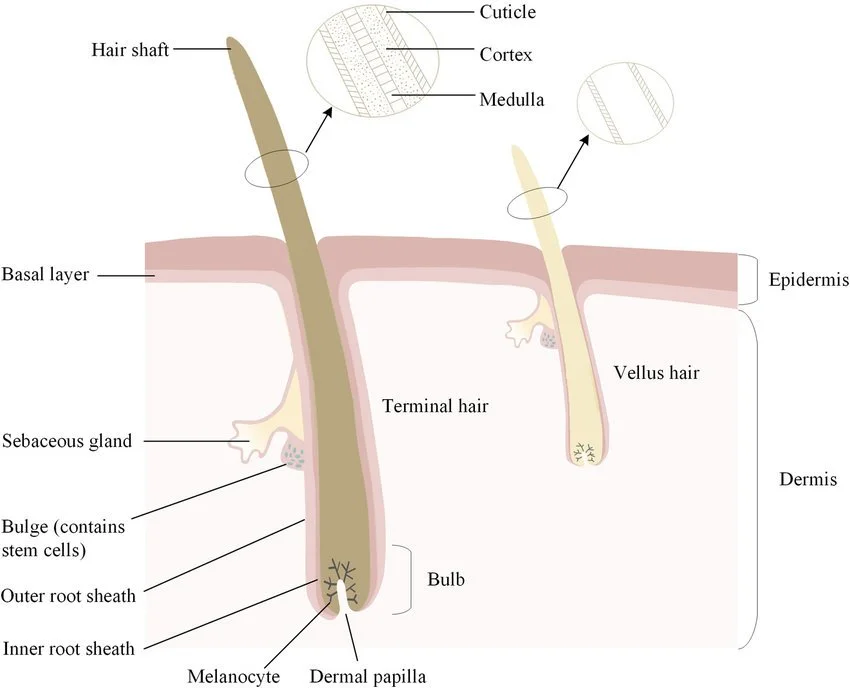
There are two types of hair on the body, vellus hair and terminal hair. Terminal hair having subgroups of different types of hair.
Vellus hair
Vellus hair can be found over the entire body. It appears as soft, fine, short hairs that are non pigmented or very lightly pigmented and can be all but invisible.
Why it’s important to get multiple treatments:
In both the catagen and telogan phase, as mentioned above, laser hair removal treatments are ineffective. At a time about 1 - 5% of your hair is in the catagen phase and about 10 - 15% of your hair is in the telogan phase. This is why it’s important to space treatments 4 to 6 weeks apart and have anywhere from 6 to 8 sessions, to allow for the most success in stopping hair growth. With spaced out appointments for a period of months we are able to target most hairs in the anagen phase.